
The Indigenous Myth

Over the past few years, the friction between the “Indigenous” peoples of the Americas, Canada in particular, and the rest of us has ramped up to a point not seen for quite some time.
Beyond just the ubiquitous land rights claims preceding almost any public gathering, Canadians are subjected to almost daily public apologies by officials for the alleged sins of their fathers, and a bombardment by the state broadcaster of how noble the “Indigenous” peoples were before the “white” man came.123
The list of contentious, sometimes even deadly, events between the “Indigenous” and the non-“Indigenous” in Canada is long, and much of it can be attributed to the use of a word: “Indigenous.”
Let’s put the record straight. The people to whom we are referring are not “Indigenous.”
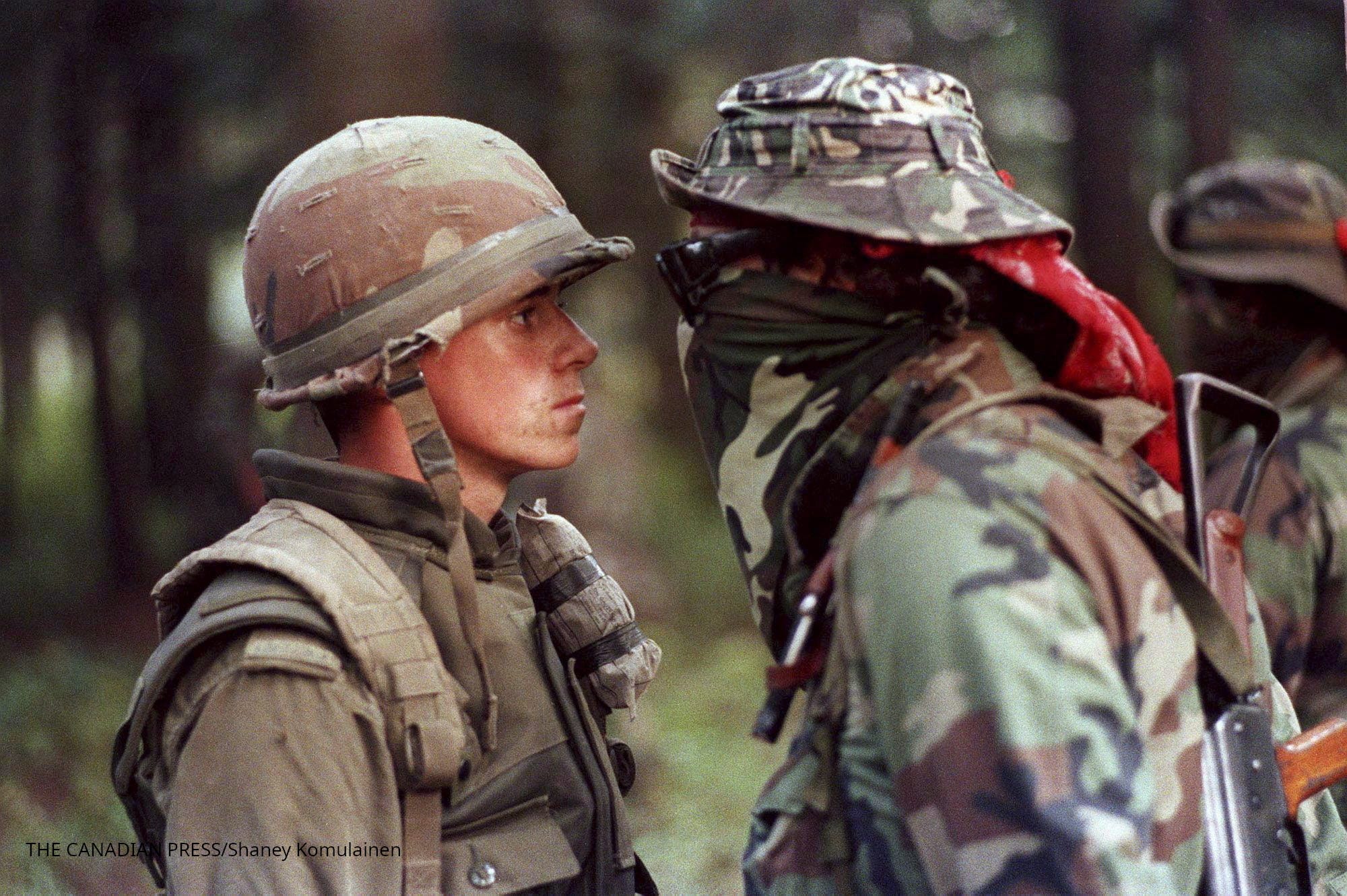
The term “indigenous” (sometimes used interchangeably with “native”) comes from the Latin indigena, meaning “sprung from the land.” It describes a species, organism, or population that occurs naturally in a specific geographic area or ecosystem because it evolved there through local natural processes, rather than being introduced by human activity (intentionally or accidentally).4
Nobody can be considered to be “Indigenous” to the place they currently live—not the English in Britain, not the Chinese in China, and not the “Indigenous” peoples of North America.
Continued use of the term to describe the descendants of those who crossed the Beringia land bridge continues to add to the myth surrounding them: that they are somehow special and that they deserve special treatment by the descendants of those who came here by boat or plane, by virtue of them having “sprung from the land” while we are interlopers who could never truly call this land “home.”567
Most self-identified “Indigenous” individuals are no different from other modern Canadians or Americans. They are fully integrated into mainstream society: typically born in hospitals with access to modern medicine, speaking, reading, and writing the same languages as everyone else, often sharing the same religious faiths, and subject to the same laws that govern us all. Upwards of 80% live off-reserve in cities and towns, holding the same jobs and behaving in much the same way as the rest of the population.
This myth of the “Indigenous” somehow being special is simply that—a myth.
Through intermarriage, less than 20% of those claiming to be “Indigenous” are what one might consider to be “full-blooded,” to use that archaic term. Most, in fact, have less than half their ancestry as “Indigenous.”89
So by what name should they be referred to? That is, if such a distinction should even be made, since we are all of the same race—the human race. I have come up with one: Paleoamerid.
To my knowledge, this term has never been used before, but it describes perfectly those we now inappropriately call “Indigenous.” I coined the term in an article I published on Substack on December 8, 2025.10
Paleoamerid
/ˌpeɪ.li.oʊˈæm.ə.rɪd/
noun
A person in the Americas whose ancestry derives from the human populations that migrated from Beringia into the Western Hemisphere during the Late Pleistocene epoch (approximately 23,000–15,000 years before present). The term denotes deep-time descent resulting from ancestral immersion in the continents, without any implication of literal autochthony (“sprung from the land”), as the term is applied in biology to native flora and fauna.
Etymology: From Greek palaiós (“ancient, of former times”) + amer- (referring to the Americas and incorporating Latin mergere “to plunge, immerse”) + -id (from Greek -idēs, patronymic suffix denoting “descendant of” or “one of the lineage of”).
Contrast Neoamerid.
Neoamerid
/ˌniː.oʊˈæm.ə.rɪd/
noun
A person in the Americas whose primary ancestral lines arrived after sustained European contact began in 1492, encompassing all subsequent waves of immigration from Europe, Africa, Asia, and elsewhere. The term denotes relatively recent ancestral immersion in the continents and parallels Paleoamerid by classifying every individual in the Americas solely according to the timing of that immersion.
Side Note: I recognize that excluded from these two new terms are those citizens who are actual immigrants to the Americas and not descendants of immigrants.
What do these two new terms imply? That those living in the Americas today are all descendants of immigrants. Some of our ancestors immigrated to these lands a long time ago; some came more recently. Some walked, while others took sailing vessels, steamships, or wide-body jets. But in the final analysis, those living on the land today are all children of those who actually took the risk of leaving their homeland—whether it was Siberia 15,000 years ago or Ireland 150 years ago.
Just as there is nothing inherently special about the Paleoamerids of Canada as a collective, likewise there is nothing inherently special about the Neoamerids of Canada as a collective. Unless your interests lie in genealogy, anthropology, or genetics, all individuals should rightly be judged on their personal characteristics and not on some label based on their ancestry.
To this end, I say we critically examine why it is we seem to virtue-signal land claim rituals before school plays and public speaking events, why, in this modern day with the demographics of the Americas what they are, we talk of a few people having “title” over all the land, and why, either figuratively or literally, many “take the knee” in deference to people who are essentially no different from us.
Despite all legal judgments to date, and recognizing that laws are ultimately nothing more than codified conventions, I propose the following—at the risk of being somewhat controversial:
All treaties originally signed between people dressed in silk, linen, and powdered wigs and those dressed in animal skins, furs, and feathered headdresses should be declared null and void in our modern world and consigned to the annals of history.
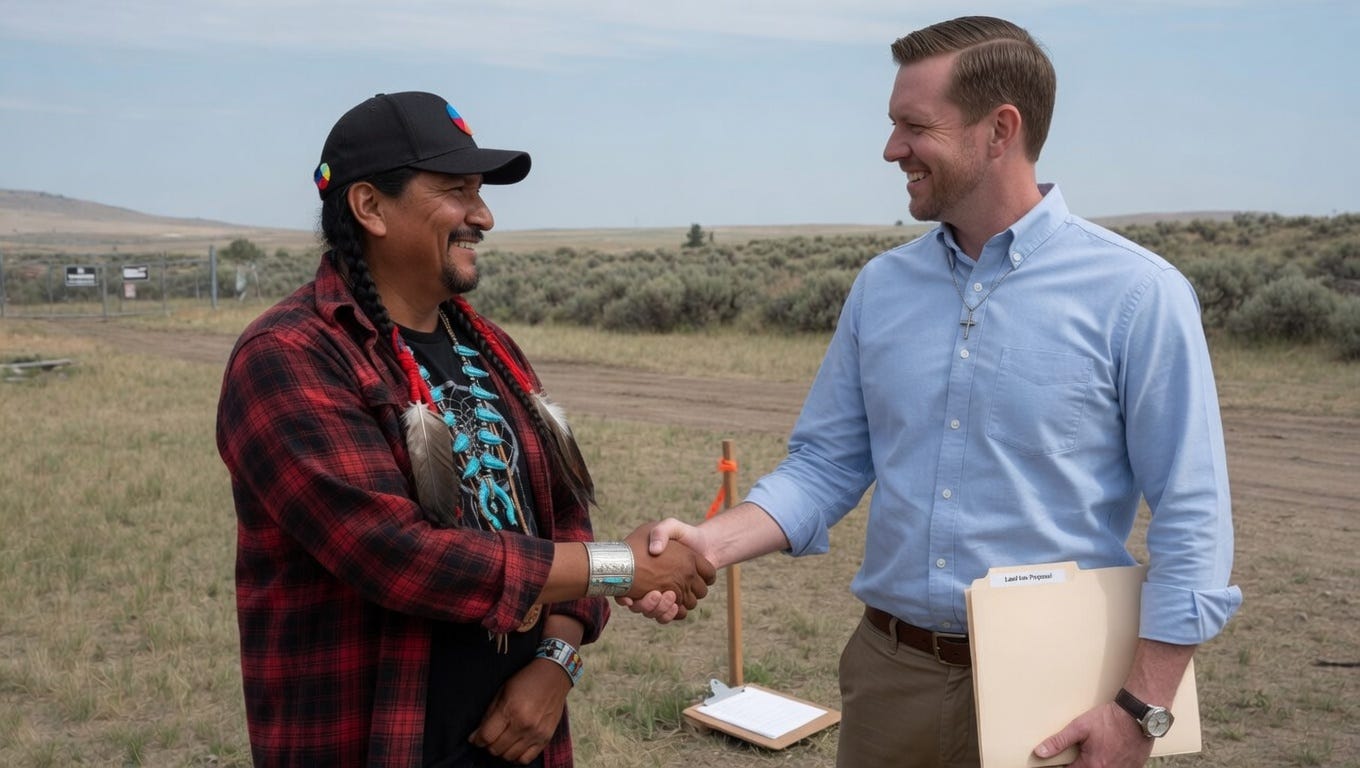
Once that is accomplished, we should all be treated equally under objective laws that reflect the current makeup of our society. One people, one race—the human race.


https://www.latin-dictionary.net/definition/23409/indigenus-indigena-indigenum
https://ammsa.com/publications/windspeaker/voice-land-our-language
https://indianz.com/News/2014/014617.asp
https://mikmawplacenames.ca/
https://www.ncbi.nlm.nih.gov/books/NBK233104/
https://en.wikipedia.org/wiki/Native_Americans_in_the_United_States#Demographics
